Stuck in Replay? How Rumination Affects Our Mind and Self-Esteem

Have you ever found yourself ruminating on a past argument, reliving the hurt and anger? Or had moments where you start thinking about an argument you had and suddenly you’ve developed a whole alternate scenario of how things could have turned out, what would have been an amazing comeback, or how we could have avoided being embarrassed through a quip or a retort. The problem is – when we’re on this runaway train of thought, our bodies respond as if we are in the moment of this imagined scenario and all the associated feelings and emotions flood in – our heart rate rises, the cortisol levels in our body increase, and suddenly we find ourselves lying awake, anxious, in the middle of the night, when very little of what we imagined actually happened, and with no positive outcome or solution. This is the trap of rumination.

How does the Brain Ruminate:

In the brain, rumination is often linked to the default mode network (DMN) – which is active when our mind wanders, and involves self-referential processing. It’s active when we’re awake but not really thinking about anything in particular. While it might feel that rumination is a powerful emotion that demands attention, it can actually affect one’s self-perception negatively i.e. the incident that occurred with me in which I was strongly implicated really hurt my feelings. Continuously ruminating on a distressing incident can amplify the emotional pain and solidify an overly critical self-assessment. This process makes it difficult to separate one’s identity from these negative events, perpetuating a cycle of self-blame and lowered self-esteem.

Rumination v/s Reflection:

There’s a fine but clear distinction between rumination and reflection. Reflection often involves analyzing an instance in a balanced way, considering both positive and negative aspects, with the aim to learn and grow from it. Rumination, on the other hand, focuses on negative emotions and doesn’t lead to solutions. For instance, imagine a scenario where you gave a presentation at work and afterwards felt you could have explained a section better:

Rumination: You dwell on the negative thoughts: “It was a disaster! Everyone thinks I’m bad. I should quit!” (Focuses on self-blame and negativity)

Reflection: After the presentation, you think, “I could have explained that part better. Next time, I’ll try a different visual aid.” (Focuses on learning from a mistake)

Ruminating can sometimes be a useful mechanism as it can help us learn from our experiences. By ruminating on what went wrong, our ancestors could learn to avoid similar dangers or mistakes in the future. While these evolutionary reasons may have been advantageous in the past, the modern world presents far fewer physical threats, yet our brains continue to operate as if we’re on constant high alert. Letting go of that one seemingly insensitive thing your friend said will not threaten your survival. However, this mismatch between our evolutionary processes and the modern society leads to overgeneralization, where the brain applies ancient survival mechanisms to modern-day stresses, resulting in chronic rumination and anxiety over relatively minor issues.

Avoiding the Rumination Trap:

There are various strategies that are suggested in bodies of research that can help practically step out the rumination cycle. Some of the ones I find most effective are:

  • Thought labeling: Identify rumination when it happens, and simply label it. “I’m stuck in a rumination cycle right now’. Language is powerful, and recalling just one word that labels a train of thought can help disrupt it.
  • Scheduled ‘Worry time’: When I’m anxious and am unable to get out of anxious thoughts, I alot myself a time window : if it’s 1 am in the night and I’m stuck in a negative loop, I set a quick alarm for the next 5-7 minutes in which I dedicate it to letting my thoughts run wild. The idea here is to allow myself to think about these things without judgment, but only during this designated time. Often, I’ve already stopped ruminating and find myself simply waiting for the alarm to ring, signaling an actual closure to the loop.
  • Physical distractions: 5 jumping jacks, a quick jig, blasting my favorite song in my ears for a few seconds, or any other form of distraction that simply takes me away for a few seconds offers great mental relief.
  • Antidote experiences: Whenever possible, I try to engage with a really positive experience, to counterbalance the negative bias inherent in rumination. This can include simple moments of joy, successes, or just a joke that cracked me up earlier.
  • Acceptance and Mindfulness: Accepting flaws without harsh judgement, and with a moment of mindful awareness is hugely powerful, although a bit harder to practice for me personally in instances of rumination.

While there are certainly many other strategies that work for different people, We have to find what works for us. We’re all wired differently, and discovering what helps in what situation is a truly personal and explorative journey. Learning about strategies and credible ways to avoid rumination and other anxious feelings is a great first step in this path so that one can then explore what works, and further bolster our mental toolkits to be able to deploy these strategies in inevitable moments of stress.

Sources and Supporting Research:

The Space Between Stimulus and Response

The Science Behind Why Pausing Before We React Can Change Our Lives

On Autopilot: Our Brains and Knee-Jerk Reactions

Nobel laureate Daniel Kahneman passed recently, and a lot of what I write about started from his famous book – Thinking Fast and Slow. His loss is an absolute loss to the world, but his contributions are forever etched in history. Thank you for everything you’ve done, Danny.

Have you ever fired off a sarcastic email in a moment of frustration, only to regret it later, or snapped at a co-worker just because you were having a bad day? These are examples of how when a triggering stimulus occurs, our brains often react on autopilot, without much conscious control.

In his research, Danny explained how our brains operate with two distinct systems. System 1, often referred to as the “fast thinking” system, is our primal, instinctive processor. It’s responsible for split-second decisions, recognizing patterns, and triggering emotional responses like fear or anger. Imagine you’re crossing the street and suddenly see a car careening towards you. System 1 kicks in, triggering the fight-or-flight response, and you jump back onto the sidewalk.

System 2, on the other hand, is the more deliberative system. It’s slower, more analytical, and responsible for complex thought, planning, and weighing options. This is the system we use when tackling a challenging problem at work or navigating a nuanced social situation. What happens when we are triggered in such a social situation though?

When Emotions Hijack Our Thinking (How System 1 Takes Over)

What happens if we’re having a bad day, and someone said something that just rubbed us the wrong way, or started to anger us? System 2 is quickly thrown out of the window, and emotions like anger, annoyance, irritation and impatience kick in. What would otherwise have been a mild annoyance has the potential to turn into a full-blown episode – just because we reacted instead of responding to a situation.

Similarly, imagine being stuck in rush hour traffic, a classic trigger for frustration. System 1 might fire off a string of negative thoughts, making us feel increasingly tense and agitated, which does nothing more than make the time we inevitably have to spend in traffic be even more distressing than it needs to be.

However, by pausing to acknowledge these thoughts (“I’m getting frustrated right now”), we can activate System 2. This allows us to choose a more constructive response, like putting on a song, changing the radio station, or calling that friend you’ve been meaning to call but just haven’t been able to make time for.

The Power of the Pause:

Here’s the science behind why this pause matters: our brains are a simulation generating machine – what we imagine, our brains make real. Research suggests that the emotional response triggered by these simulations can feel just as real as an actual experience [2]. By recognizing this tendency of our minds, we can gain agency over our reactions. The pause allows us to break the spell of negativity and choose a response that aligns with our values and goals.

In my personal experience with this, I’ve cultivated a cue – whenever I feel anxious and seem to be getting annoyed with everything – this itself is my trigger to just take the tiniest second and slow down, simply to acknowledge that I’m angry and annoyed right now. In moments of stress, this activity does feel annoying at first but by telling myself that I can be angry immediately after my little pause, if I still need to, really helps and I rarely end up picking my anger up from where I left it. With practice, the efficacy of this approach has grown for me. After all, being stressed and acting stressed creates a self-perpetuating cycle in itself. My goal is to (try to) understand what I’m feeling, take action if I can, and let it go it I can’t.

This isn’t about suppressing emotions, it’s about becoming more aware of the inner workings of the mind. By practicing this, we can create distance from thoughts, respond instead of react to situations, and live more deliberately.

Creating space between stimulus and response can be a hugely powerful tool. By cultivating awareness and harnessing the pause, we can transform our reactions into conscious responses, fostering a more mindful and intentional way of being.

Sources:

The Secret to Lasting Happiness: Get off the Hedonic Treadmill

Hedonism refers to the pursuit of pleasure and the avoidance of pain. The principle is that seeking pleasure and avoiding pain is the main goal of life. I don’t remember a lot of fine details about early philosophers, but I do remember the school of Cyrenaics – founded by the Greek philosopher Aristippus – which advocates that life should be aimed at maximizing pleasure and avoiding pain. Unsurprisingly, research has shown that seeking pleasure is in fact not the key to happiness.

The concept of the Hedonic Treadmill, also known as hedonic adaptation, is a theory that builds on the concept of hedonism and Cyrenaic philosophy. It suggests that as people make more money or experience positive changes, their expectations and desires rise in tandem, leading to no permanent gain in happiness1. You got that raise, but now you want to spend more money to get things you wouldn’t get earlier. You got that new phone, but now you know that the next one is releasing in 4 months. You got that new house, but then you want new furniture and decor, until you finally get used to it…

The different wanting and liking circuits have a role to play here, and other factors that contribute to this endless hamster wheel include:

Adaptation – we simply get used to things.

Rising expectations, comparison and related socio-cultural factors- the reference group to ‘measure’ success changes as one attains more success.

Extrinsic goals – Focus on material things as opposed to experiences and relationships,

…and – the most impactful in my opinion,

Neglect of core psychological needs – where this pursuit through external achievements fails to address or even acknowledge core needs such as autonomy, competence, connection with others and so on.

This concept is significant in understanding why pursuing material gains or external achievements often fails to produce lasting happiness.

Focusing on intrinsic values, fostering personal relationships, and finding meaning beyond material gains may offer more sustainable paths to well-being, and this is why strategies for achieving lasting happiness often focus on internal factors like gratitude, fostering positive relationships, and experiences rather than expenses.

Some things I find practically useful in trying to step off the hedonistic treadmill include:

  • Focusing on intrinsic values – which begins by exploring what they actually are for each of us. Maybe it’s volunteering for a cause one cares about, spending time in nature, a creative pursuit, or even the joy of listening to your favorite song as a dedicated 4 minute activity.
  • Nurturing our relationships: The impact of strong social connections on well-being is undisputed. This can look like making time for loved ones, investing in quality conversations, and building a support network that uplifts and encourages rather than one that competes and compares2.
  • Savoring simple pleasures: A regular sunset, a regular meal shared with friends, the satisfaction of completing a task. Practicing gratitude for these everyday moments and pausing just for a second to appreciate them, especially as a habit can have a profound impact in the long term.

While the hedonistic treadmill is a real trap, it’s important to remember that pleasure can be a part of a happy life. The key is to find a healthy balance. Instead of mindlessly pursuing fleeting highs, focus on activities that bring genuine enjoyment instead of those that are an autopilot dopamine seeking response.

Ultimately, significant bodies of research and some common sense suggests that lasting happiness doesn’t come from external validation or material possessions (alone). It comes from cultivating a meaningful life that aligns with our values, fosters strong connections, and allows us to appreciate the simple joys along the way.

Footnotes:

  1. Variability in the Set Point: The idea that everyone has a fixed happiness set point has been questioned. Recent studies suggest that this set point can change over time due to sustained life changes, psychological practices, or significant life events.
  2. The caveat here is that this is easier said than done. Depending on personal circumstance which can vary drastically depending on factors completely out of an individual’s control, it simply might not be possible for them to create, let alone foster relationships

Supporting Research:

The Wisdom of Not Knowing: How a Beginner’s Mind Enhances Expert Decision-Making


“In the beginner’s mind there are many possibilities, but in the expert’s there are few.” – Zen Master Suzuki Roshi

In his book “Zen Mind, Beginner’s Mind,” Master Roshi beautifully explains the wisdom in maintaining a beginner’s mind – an attitude of openness, eagerness, and lack of preconceptions when engaging in any activity, even if one is experienced in the activity.

When I came across this quote from Master Roshi, Daniel Kahneman’s ‘Expertise Bias’ immediately came to mind. Dan identifies the same issue from a highly pragmatic and research driven basis. In his work he identifies the tendency of experts to overestimate their accuracy, and underestimate the difficulty of tasks, coined as Expertise Bias.

Intuitively, we would imagine that greater expertise would lead to superior judgment, but as Kahneman shows in his Nobel prize winning work on decision making, this is not always the case. Experts can tend to rely on quick, instinctive decisions which can lead to decreased accuracy and reliability of these expert judgements.

Applying this to Master Suzuki Roshi’s philosophical take on the beginner’s mind, I begin to understand the importance of cultivating a beginner’s mind, no matter the level of proficiency. For example, I have been strength training for over 15 years, and have some experience coaching people as well. In one of my workouts very recently, I realized that making a simple adjustment to my movement immediately improved muscle activation. Being open to trying a different way of doing something that I’ve done over 500 times was a true moment of appreciation for Beginner’s Mind. At the same time, my experience (certainly not expertise) was useful in identifying that the change is working my targeted muscle more effectively.

Leaving space for beginner’s mind can circumvent expertise bias, overconfidence and other pitfalls that come with increasing experience and proficiency. What does this look like in the real world?

A few practices that I’ve found resonate with the idea:

  • Embrace the “not knowing”: Instead of striving to have all the answers, acknowledge that there’s always more to learn. Beginner’s mind thrives on a sense of wonder and curiosity.
  • Focus on the present moment: Like mindfulness practices, beginner’s mind encourages us to be fully engaged with what’s happening right now.
  • Let Go of Preconceptions: Our minds are often clouded by our past experiences, judgments, and beliefs. Making a conscious effort to let go of these preconceptions allows us to see things as they are, rather than as we think they should be.

Balancing Beginner’s Mind and Expertise

The key, again, lies in integrating rather than opposing these two seemingly contrasting mindsets. Our experience serves as a foundation from which we can launch into new discoveries with a beginner’s mind. Expertise offers a framework, but shouldn’t limit us to pre-defined solutions.

For a master chef, their years of experience allow them to understand ingredients and techniques on a deeper level, yet the greatest chefs are still constantly innovating, experimenting with new flavor combinations and they combine their expertise with the openness of a beginner to create something truly remarkable.

Limitations of the Beginner’s Mind

There’s wisdom in acknowledging that expertise has its place. In critical situations, especially those requiring quick decisions based on past knowledge, relying on honed skills can be essential. A doctor being mindful of expertise bias could approach diagnosis with the openness of a beginner; however their training and expertise would be vital during a procedure when they need to be decisive and act quickly, relying on years if not decades spent honing their practice. For most of us, most of the time, when we are not facing life-or-death decisions, beginner’s mind is an incredible philosophy to practice.

Beginner’s mind keeps us open to new possibilities, while expertise provides the tools to navigate them effectively. Embracing both can let us approach life with a richer, more adaptable perspective. I’ve found that the benefits of beginner’s mind shows up in everyday life including in strengthening relationships (listening to learn), enhancing learning, problem solving and overall joy in life by continuing to be fascinated even with the mundane.

Stop Comparing, Start Thriving: Why “Comparison is the Thief of Joy” Matters More Than Ever

We often hear the adage – “Comparison is the thief of joy” – but why? Why do humans compare and does it ever serve us?

The human tendency to compare ourselves with others has deep roots in the theory of evolution and social psychology. Neuroimaging research* has even shown that there are certain regions of the brain that are activated when we indulge in social comparisons, meaning that it has a deeper, biological biases along with the psychological and evolutionary. But why have we evolved to have this trait if it is bad?

Evolutionarily, comparison helped improve our chances of survival. Simply put, it let early humans learn who was better at finding food, avoiding predators, making better tools etc. This was not about jealousy or pride, but about finding the best strategy for survival. “if she can catch more fish using that technique, maybe I should try it…”

Comparison can be adaptive and it can motivate self-improvement, foster empathy and enhance learning. When comparison is adaptive, it is a proponent of progress instead of a thief of joy. Mentorship is a good example of this. I may not be inspired if I didn’t compare myself to someone who has achieved success on an aspirational path. `

Alternatively, comparison can be maladaptive, characterized by a negative focus, a distorted perception of reality, leading to decreased well-being, low self-esteem, jealousy, social isolation, and mental conditions like depression and anxiety. We’re all too familiar with seeing someone’s highly curated social media content and immediately (unconsciously) comparing ourselves to their situation, leading to a sudden negative fluctuation in our mood, all from a few seconds of screentime. 

I think of the distinction between adaptive and maladaptive comparison with a simple question – Does it energize and motivate me (adaptive), or does it leave me feeling discouraged and inadequate (maladaptive).

Do any of us remember when the number of likes or views became such a powerful force of validation? This comparison can be adaptive in that it can push me to produce better content, but (more often) it ends up being maladaptive in that I can hyper-fixate on how one of my posts got a third of the impressions over another, with my brain taking no time at all to start spinning the tale of how I’m being perceived by my peers and connections and that I’ve done something wrong.

When we compare, we end up trying to see where we stand in an imagined ranking system against others. We’re all different, we all have cool things about us, but at the same time, we’re all just normal folks with our own issues and mistakes.

Addressing the challenge of shifting from maladaptive to adaptive comparisons requires a conscious effort to reframe our perspective. It’s about cultivating a mindset where our focus shifts from rivalry to self-improvement, from envy to inspiration. This doesn’t mean ignoring the achievements of others but rather seeing them as benchmarks for our own potential growth, without the self-deprecating narrative.

Here’s a few ways to put this mindset shift into practice:

  • Catch Yourself: The first step is becoming aware of your comparison habits. When you find yourself feeling down after scrolling through social media, take a breath and ask yourself, “Is this motivating me or making me feel small?”
  • Reframe the Narrative: Instead of the usual “Ugh, I’ll never be as cool as them,” try a more positive spin. “Wow, that’s inspiring! Maybe I could try incorporating some of their techniques into my own work.”
  • Gratitude: Thankful brains are less comparison prone. Acknowledging even 3 small things one is grateful for can have a deeply uplifting effect.

The constant comparison trap can steal our joy and stunt our growth. How about we instead focus on celebrating uniqueness, seeking inspiration instead of competition, & focusing on our own strengths?

* Supporting Resources:

What Is ACT Therapy? A Beginner’s Guide to Acceptance and Commitment Therapy

What is ACT Therapy -  a beginner's guide to acceptance and commitment therapy

Acceptance commitment therapy (ACT) is a form of therapy that emphasizes embracing thoughts and feelings rather than fighting them or feeling guilt for having them. It also focuses on committing to actions that align with our personal values. ACT has become one of my favorite go-to resources for self-regulation, and I’ve found it highly effective in enhancing psychological flexibility.

My Introduction to ACT

My introduction to ACT came through a conversation with Dr. Steven Hayes, a leading figure in behavior analysis and therapy and the founder of ACT, on the @being well podcast with Dr Rick Hanson and Forrest Hanson.

At its core, ACT involves six processes that work together to promote psychological flexibility, starting with acceptance and culminating in committed action.

  • Acceptance: Whenever I’m dealing with a difficult emotion, or even generalized anxiety that I can’t put my finger on, remembering the “A” of ACT – Acceptance – truly helps. In these stressful states, not only is my ability to think clearly diminished (research backs this up), but the inability to identify the exact source of anxiety further hinders my ability to deal with it. Simply accepting that I’m anxious, even without knowing why, helps create some distance from the emotion, allowing me to (sometimes) self-regulate.
  • Mindfulness: There are other situations where I know the cause of my anxiety. Here too, acceptance proves equally helpful. It allows me to feel the anxiety intensely for a brief moment before it subsides. I find difficult emotions like anxiety, fear, anger, and so on to be analogous to quicksand – the more I struggle, the deeper I sink. Accepting the emotion is akin to calming my body instead of struggling, which minimizes sinking and allows for self-rescue. Dr. Hayes highlights specific tools to aid in acceptance, including diffusion (stepping back from thoughts and recognizing them as mental events, not absolute truths), mindfulness (focusing on the present moment with openness and curiosity), and identifying core values.
  • Identifying Core Values: The values piece took me a while to understand in a felt sense (as opposed to conceptual understanding) but it’s truly powerful. If I am anxious about work, looking inwards includes realizing that one of my core values is to be good at what I do, get better, and to deliver high quality outcomes. This validates my stress response, turning it from something that I was fearing to something that is tugging at my core value of work ethic and growth orientation.
    There are online exercises and worksheets available to help you identify your core values – I highly recommend looking these up.
  • Committed Action: Finally, the Commitment piece – involves taking steps towards action aligned with my values even in the face of discomfort – to do what I can in my present capacity. This does not mean that I suddenly get motivated to do difficult things and jump into action, but can simply mean that I’ve put a 15 time block to initiate tackling a difficult task.

The Benefits of ACT

Practicing this takes time, but is well worth it. When successful, it almost always feels like a weight is physically lifted off of my chest, and there is enough evidence to support it’s effectiveness across conditions, long-term sustained benefits, impact of specific processes and more – all linked to improvements in mental health outcomes.

The benefits of ACT extend far beyond symptom reduction. By fostering a values-driven life, ACT leads to greater fulfillment in relationships, work, and personal growth. This holistic approach to mental well-being makes ACT a powerful tool for long-term success.

Finding Help and Resources

Professional Help: For those seeking professional help, consider consulting an ACT therapist listed in directories like the Association for Contextual Behavioral Science (ACBS).

Self-Guided Resources: If you’re interested in exploring ACT on your own, there are numerous resources available. Dr. Hayes’ books, online courses, and apps offer valuable guidance.

Additional Resources:

  • The Association for Contextual Behavioral Science (ACBS) has a directory of ACT therapists: https://contextualscience.org/
  • Effectiveness of Acceptance and Commitment Therapy for Anxiety Disorders: A Meta-Analysis: This 2016 study published in the Journal of Consulting and Clinical Psychology found that ACT was an effective treatment for anxiety disorders, with large effect sizes compared to control conditions https://psycnet.apa.org/manuscript/2019-01033-008.pdf.
  • A Review of the Empirical Evidence for Acceptance and Commitment Therapy (ACT): Treatment Effectiveness for Depression, Anxiety, and Related Disorders: This 2009 review article published in Clinical Psychology: Science and Practice looked at numerous studies and concluded that ACT has strong evidence for its effectiveness in treating depression, anxiety, and related disorders https://www.ncbi.nlm.nih.gov/pmc/articles/PMC7843707/.
  • Acceptance and Commitment Therapy for Chronic Pain: This 2006 study published in The Cochrane Database of Systematic Reviews analyzed multiple studies and found evidence that ACT can be effective in reducing pain and improving functioning for people with chronic pain https://pubmed.ncbi.nlm.nih.gov/27479642/.

How to Set Goals Effectively

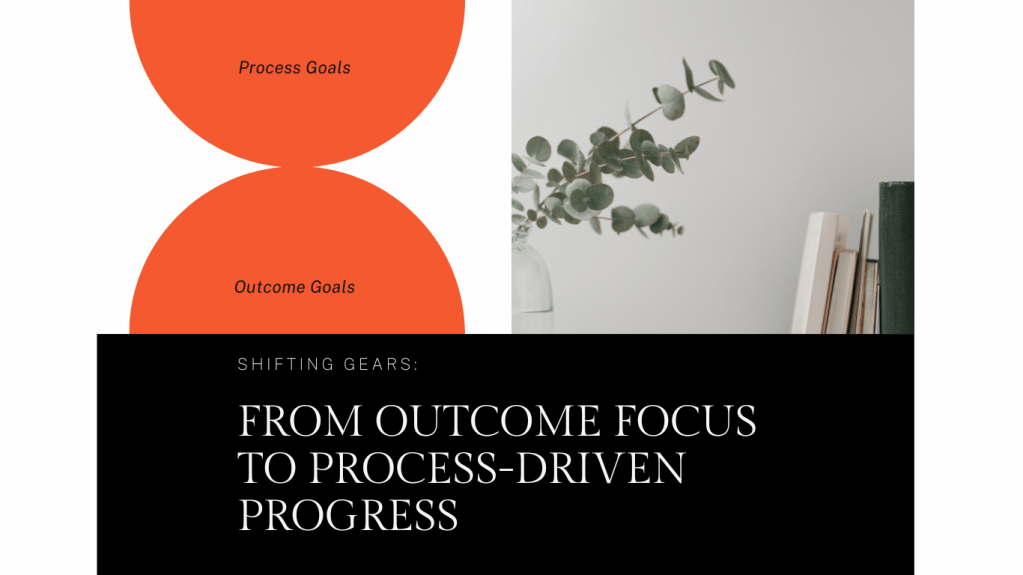
Like most of us, I have made the mistake of setting goals that are dependent on outcomes, and have been stressed about not getting there. Outcome Goals focus on the end-result and can sound like:
– I want a promotion
– I want to save X amount of money
– I want to be recognized as an expert in my field and so on.

Outcome goals are important. They give us a clear path towards something that we can strive for, but they can often be problematic because they focus only on the end result of efforts, something over which we have limited control due to the dependency on external factors. Outcome goals are great at setting a clear target to aim for, are measurable, but the dependance on external factors and lack of immediate gratification (slower progress) can lead to disappointment.

Process goals on the other hand, are means to the end for Outcome Goals.

While most of us tend to focus on outcome goals, I find that process goals often contribute more to success than outcome goals do.

Process goals focus on action – giving us a sense of agency, and are great for building habits.
Here’s why I find process goals powerful:

  • Increased control: They empower us by focusing on actions within our control, fostering a proactive approach and building confidence.
  • Improved motivation: Smaller, achievable process goals provide frequent wins and milestones, boosting motivation and preventing burnout often associated with distant, outcome-based goals.
  • Greater adaptability: They’re flexible and can be adjusted as needed, allowing us to adapt to changing circumstances and maintain progress even when outcomes shift.
  • Enhanced learning: The focus on consistent action and feedback promotes continuous learning and improvement.

The key, of course, lies in balance. Being aware of the distinction and being mindful of our internal dialog about goal setting is extremely important in getting the best out of planning and action, and the practice of balancing the two will also aid in deciding when to capitalize one over the other.

Process goals of the previous examples can look like:
– I want a promotion —> I want to upskill and be better at my job
– I want to saving X amount of money —> I want to be better at managing my finances through budgeting, tracking etc
– I want to be recognized as an expert in a field —> I want to be committed to learning and sharing my knowledge
– I want to lose weight —-> I want to train twice a week

A few strategies that help me keep process goals on track include keeping process goals SMART (Specific, Measurable, Achievable, Relevant, and Time-bound), tracking progress and celebrating small wins to stay motivated, being flexible and adjusting process goals as needed, and combining process goals with outcome goals for a balanced approach.

While the focus on goals and progress dates back to early management theories, today’s understanding draws on various fields including behavioral psychology and personal development, with modern proponent of Process Goals such as James Clear (Atomic Habits) highlighting the power of process-driven habits for lasting success. If you haven’t ready Atomic Habits already, I highly recommend it.

Wants tied to outcomes that we cannot control are a recipe for unhappiness, because while we strive for our desired outcomes, life often throws curveballs. Balancing process and outcome goals allows us to adjust our focus based on circumstances, ensuring we keep moving forward even when the end result might shift. This agility makes us more resilient and better equipped to handle the inevitable challenges that come our way.

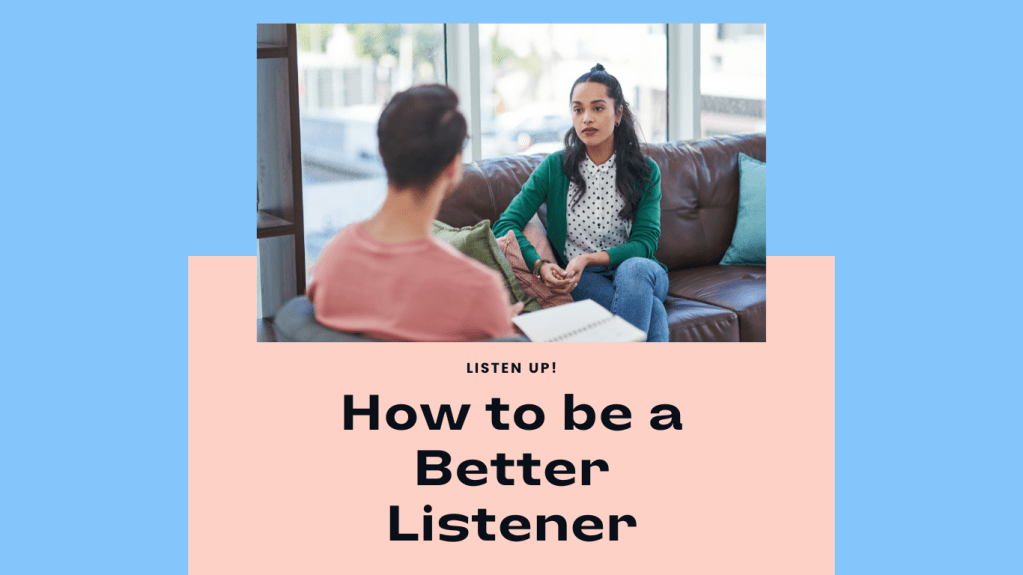
How to be a Better Listener

Satya Nadella, after taking over Microsoft in 2014, embarked on a “listening tour” where he met with thousands of employees across the globe. He actively listened to their concerns, ideas, and frustrations, which helped him diagnose Microsoft’s cultural issues and implement successful turnaround strategies.

Listening is a skill that is not often talked about, and yet is an extremely crucial part of being good at our jobs, relationships, and any social interactions. I have been trying to understand how I can be a better listener, to show up in my personal relationships, my work, and in passing interactions. I was drawn to Carolyn Coughlin’s work on the topic and have learnt a lot from her material. Carolyn is an executive coach and co-founder of Cultivating Leadership – a leadership development consulting firm. Her approach to listening is deeply informed by adult development theory and the nuanced ways in which we construct meaning and identity through language.

Carolyn describes three forms of Listening: Listening to Win, Listening to Fix, and Listening to Learn. I find that being aware of the terminology itself helps me to be more mindful of how I show up and listen better.

Listening to Win: You just saw a movie with a friend, and you’re sharing what you didn’t like about it. Your friend really liked the movie, so they counter everything you’re pointing out. Their approach is to persuade you to accept their viewpoint of how the movie was not bad, instead of just listening and trying to understand. This form of listening to win involves trying to make a problem seem nonexistent by dismissing it outright. It’s about overcoming the other person’s concerns by negating them, which can lead to a superficial resolution of conflict with little or no understanding or empathy​​ (and a completely unsatisfying exchange!)

Listening to Fix: My co-worker is sharing how they’re feeling overwhelmed at work. I find myself jumping in with suggestions for managing it and offering a dozen solutions nobody asked for.
This type of listening is action-oriented, where the listener tries to solve the speaker’s problem, often before fully understanding any nuance of the issue. Of course, It comes from a place of wanting to help, but it tends to surpass the speaker’s need to be heard and understood before seeking solutions​​. Additionally, my coworker wasn’t really asking for solutions in the first place.

Listening to Learn: This is my favorite, and is the one that I try to practice at work and in my personal relationships (although I do catch myself failing!). Carolyn explains that Listening to Learn means going into a conversation with curiosity, and a genuine desire to hear what the person is trying to share, beyond the surface level of what is being said. This often entails reflecting back to the person to show understanding, asking questions, and gaining deeper insight into their thoughts and feelings. It’s about truly understanding the speaker’s intentions and is considered a more empathetic and effective form of listening​​​​.

To me, this intuitively feels like the way I want to be heard, and so it is the form of listening I try to inculcate in my everyday. I find that it fosters connection, empathy and understanding and has led to the most meaningful conversations I have ever had.

Listening to learn in particular is a key skill in professional settings, and a display of true leadership.

My personal practice these days, is to not offer solutions if they are not asked, and to try and communicate in a way that the speaker truly feels seen and heard. Simply knowing the terminology here helps me be more mindful of this. For example, when I catch myself starting to give unwanted solutions I quietly say to myself – “I think I’m listening to fix , maybe pause for a second and ask a question instead, or just listen.”

I highly recommend consuming Carolyn’s content and ‘Listening’ to what she has to so eloquently say about this subject!