We often hear the adage – “Comparison is the thief of joy” – but why? Why do humans compare and does it ever serve us?
The human tendency to compare ourselves with others has deep roots in the theory of evolution and social psychology. Neuroimaging research* has even shown that there are certain regions of the brain that are activated when we indulge in social comparisons, meaning that it has a deeper, biological biases along with the psychological and evolutionary. But why have we evolved to have this trait if it is bad?
Evolutionarily, comparison helped improve our chances of survival. Simply put, it let early humans learn who was better at finding food, avoiding predators, making better tools etc. This was not about jealousy or pride, but about finding the best strategy for survival. “if she can catch more fish using that technique, maybe I should try it…”
Comparison can be adaptive and it can motivate self-improvement, foster empathy and enhance learning. When comparison is adaptive, it is a proponent of progress instead of a thief of joy. Mentorship is a good example of this. I may not be inspired if I didn’t compare myself to someone who has achieved success on an aspirational path. `
Alternatively, comparison can be maladaptive, characterized by a negative focus, a distorted perception of reality, leading to decreased well-being, low self-esteem, jealousy, social isolation, and mental conditions like depression and anxiety. We’re all too familiar with seeing someone’s highly curated social media content and immediately (unconsciously) comparing ourselves to their situation, leading to a sudden negative fluctuation in our mood, all from a few seconds of screentime.
I think of the distinction between adaptive and maladaptive comparison with a simple question – Does it energize and motivate me (adaptive), or does it leave me feeling discouraged and inadequate (maladaptive).
Do any of us remember when the number of likes or views became such a powerful force of validation? This comparison can be adaptive in that it can push me to produce better content, but (more often) it ends up being maladaptive in that I can hyper-fixate on how one of my posts got a third of the impressions over another, with my brain taking no time at all to start spinning the tale of how I’m being perceived by my peers and connections and that I’ve done something wrong.
When we compare, we end up trying to see where we stand in an imagined ranking system against others. We’re all different, we all have cool things about us, but at the same time, we’re all just normal folks with our own issues and mistakes.
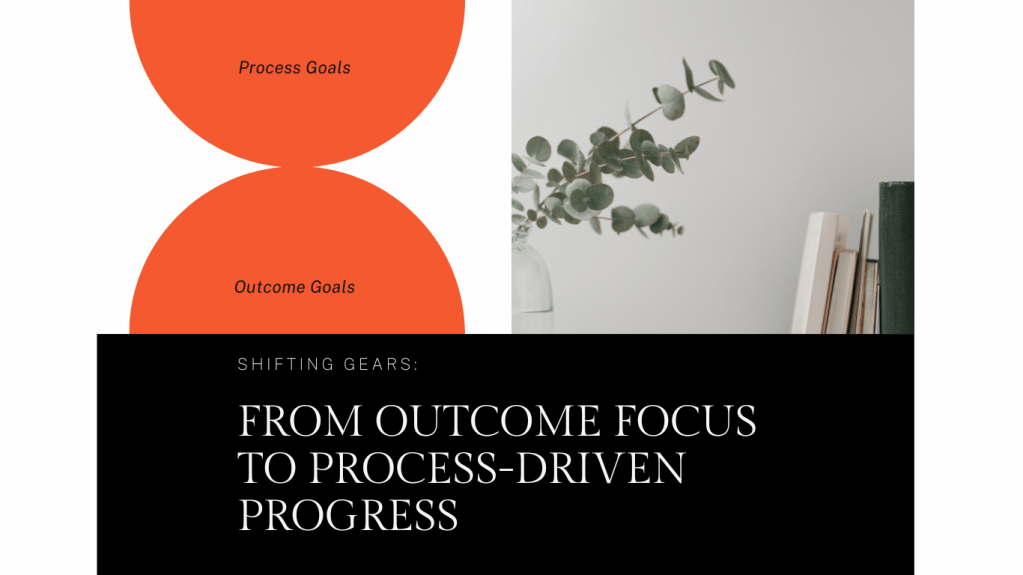
Addressing the challenge of shifting from maladaptive to adaptive comparisons requires a conscious effort to reframe our perspective. It’s about cultivating a mindset where our focus shifts from rivalry to self-improvement, from envy to inspiration. This doesn’t mean ignoring the achievements of others but rather seeing them as benchmarks for our own potential growth, without the self-deprecating narrative.
Here’s a few ways to put this mindset shift into practice:
- Catch Yourself: The first step is becoming aware of your comparison habits. When you find yourself feeling down after scrolling through social media, take a breath and ask yourself, “Is this motivating me or making me feel small?”
- Reframe the Narrative: Instead of the usual “Ugh, I’ll never be as cool as them,” try a more positive spin. “Wow, that’s inspiring! Maybe I could try incorporating some of their techniques into my own work.”
- Gratitude: Thankful brains are less comparison prone. Acknowledging even 3 small things one is grateful for can have a deeply uplifting effect.
The constant comparison trap can steal our joy and stunt our growth. How about we instead focus on celebrating uniqueness, seeking inspiration instead of competition, & focusing on our own strengths?
* Supporting Resources:
- Social Comparison Modulates the Neural Basis of Reward (https://www.ncbi.nlm.nih.gov/pmc/articles/PMC6987244/) by Matthew D. Lieberman et al. (2007): This study uses fMRI to show that brain regions associated with reward processing are activated during social comparison, particularly when comparing oneself to those perceived as better off.
- How Social Media Affects Our Mental Health by Harvard Health Publishing: https://www.hsph.harvard.edu/news/features/is-social-media-use-bad-for-young-peoples-mental-health-its-complicated/ – explores the link between social media use and mental health challenges. It discusses how curated online profiles can fuel social comparison and feelings of inadequacy.

 Pawan Kapoor