The Secret to Lasting Happiness: Get off the Hedonic Treadmill

Hedonism refers to the pursuit of pleasure and the avoidance of pain. The principle is that seeking pleasure and avoiding pain is the main goal of life. I don’t remember a lot of fine details about early philosophers, but I do remember the school of Cyrenaics – founded by the Greek philosopher Aristippus – which advocates that life should be aimed at maximizing pleasure and avoiding pain. Unsurprisingly, research has shown that seeking pleasure is in fact not the key to happiness.

The concept of the Hedonic Treadmill, also known as hedonic adaptation, is a theory that builds on the concept of hedonism and Cyrenaic philosophy. It suggests that as people make more money or experience positive changes, their expectations and desires rise in tandem, leading to no permanent gain in happiness1. You got that raise, but now you want to spend more money to get things you wouldn’t get earlier. You got that new phone, but now you know that the next one is releasing in 4 months. You got that new house, but then you want new furniture and decor, until you finally get used to it…

The different wanting and liking circuits have a role to play here, and other factors that contribute to this endless hamster wheel include:

Adaptation – we simply get used to things.

Rising expectations, comparison and related socio-cultural factors- the reference group to ‘measure’ success changes as one attains more success.

Extrinsic goals – Focus on material things as opposed to experiences and relationships,

…and – the most impactful in my opinion,

Neglect of core psychological needs – where this pursuit through external achievements fails to address or even acknowledge core needs such as autonomy, competence, connection with others and so on.

This concept is significant in understanding why pursuing material gains or external achievements often fails to produce lasting happiness.

Focusing on intrinsic values, fostering personal relationships, and finding meaning beyond material gains may offer more sustainable paths to well-being, and this is why strategies for achieving lasting happiness often focus on internal factors like gratitude, fostering positive relationships, and experiences rather than expenses.

Some things I find practically useful in trying to step off the hedonistic treadmill include:

  • Focusing on intrinsic values – which begins by exploring what they actually are for each of us. Maybe it’s volunteering for a cause one cares about, spending time in nature, a creative pursuit, or even the joy of listening to your favorite song as a dedicated 4 minute activity.
  • Nurturing our relationships: The impact of strong social connections on well-being is undisputed. This can look like making time for loved ones, investing in quality conversations, and building a support network that uplifts and encourages rather than one that competes and compares2.
  • Savoring simple pleasures: A regular sunset, a regular meal shared with friends, the satisfaction of completing a task. Practicing gratitude for these everyday moments and pausing just for a second to appreciate them, especially as a habit can have a profound impact in the long term.

While the hedonistic treadmill is a real trap, it’s important to remember that pleasure can be a part of a happy life. The key is to find a healthy balance. Instead of mindlessly pursuing fleeting highs, focus on activities that bring genuine enjoyment instead of those that are an autopilot dopamine seeking response.

Ultimately, significant bodies of research and some common sense suggests that lasting happiness doesn’t come from external validation or material possessions (alone). It comes from cultivating a meaningful life that aligns with our values, fosters strong connections, and allows us to appreciate the simple joys along the way.

Footnotes:

  1. Variability in the Set Point: The idea that everyone has a fixed happiness set point has been questioned. Recent studies suggest that this set point can change over time due to sustained life changes, psychological practices, or significant life events.
  2. The caveat here is that this is easier said than done. Depending on personal circumstance which can vary drastically depending on factors completely out of an individual’s control, it simply might not be possible for them to create, let alone foster relationships

Supporting Research:

What Is ACT Therapy? A Beginner’s Guide to Acceptance and Commitment Therapy

What is ACT Therapy -  a beginner's guide to acceptance and commitment therapy

Acceptance commitment therapy (ACT) is a form of therapy that emphasizes embracing thoughts and feelings rather than fighting them or feeling guilt for having them. It also focuses on committing to actions that align with our personal values. ACT has become one of my favorite go-to resources for self-regulation, and I’ve found it highly effective in enhancing psychological flexibility.

My Introduction to ACT

My introduction to ACT came through a conversation with Dr. Steven Hayes, a leading figure in behavior analysis and therapy and the founder of ACT, on the @being well podcast with Dr Rick Hanson and Forrest Hanson.

At its core, ACT involves six processes that work together to promote psychological flexibility, starting with acceptance and culminating in committed action.

  • Acceptance: Whenever I’m dealing with a difficult emotion, or even generalized anxiety that I can’t put my finger on, remembering the “A” of ACT – Acceptance – truly helps. In these stressful states, not only is my ability to think clearly diminished (research backs this up), but the inability to identify the exact source of anxiety further hinders my ability to deal with it. Simply accepting that I’m anxious, even without knowing why, helps create some distance from the emotion, allowing me to (sometimes) self-regulate.
  • Mindfulness: There are other situations where I know the cause of my anxiety. Here too, acceptance proves equally helpful. It allows me to feel the anxiety intensely for a brief moment before it subsides. I find difficult emotions like anxiety, fear, anger, and so on to be analogous to quicksand – the more I struggle, the deeper I sink. Accepting the emotion is akin to calming my body instead of struggling, which minimizes sinking and allows for self-rescue. Dr. Hayes highlights specific tools to aid in acceptance, including diffusion (stepping back from thoughts and recognizing them as mental events, not absolute truths), mindfulness (focusing on the present moment with openness and curiosity), and identifying core values.
  • Identifying Core Values: The values piece took me a while to understand in a felt sense (as opposed to conceptual understanding) but it’s truly powerful. If I am anxious about work, looking inwards includes realizing that one of my core values is to be good at what I do, get better, and to deliver high quality outcomes. This validates my stress response, turning it from something that I was fearing to something that is tugging at my core value of work ethic and growth orientation.
    There are online exercises and worksheets available to help you identify your core values – I highly recommend looking these up.
  • Committed Action: Finally, the Commitment piece – involves taking steps towards action aligned with my values even in the face of discomfort – to do what I can in my present capacity. This does not mean that I suddenly get motivated to do difficult things and jump into action, but can simply mean that I’ve put a 15 time block to initiate tackling a difficult task.

The Benefits of ACT

Practicing this takes time, but is well worth it. When successful, it almost always feels like a weight is physically lifted off of my chest, and there is enough evidence to support it’s effectiveness across conditions, long-term sustained benefits, impact of specific processes and more – all linked to improvements in mental health outcomes.

The benefits of ACT extend far beyond symptom reduction. By fostering a values-driven life, ACT leads to greater fulfillment in relationships, work, and personal growth. This holistic approach to mental well-being makes ACT a powerful tool for long-term success.

Finding Help and Resources

Professional Help: For those seeking professional help, consider consulting an ACT therapist listed in directories like the Association for Contextual Behavioral Science (ACBS).

Self-Guided Resources: If you’re interested in exploring ACT on your own, there are numerous resources available. Dr. Hayes’ books, online courses, and apps offer valuable guidance.

Additional Resources:

  • The Association for Contextual Behavioral Science (ACBS) has a directory of ACT therapists: https://contextualscience.org/
  • Effectiveness of Acceptance and Commitment Therapy for Anxiety Disorders: A Meta-Analysis: This 2016 study published in the Journal of Consulting and Clinical Psychology found that ACT was an effective treatment for anxiety disorders, with large effect sizes compared to control conditions https://psycnet.apa.org/manuscript/2019-01033-008.pdf.
  • A Review of the Empirical Evidence for Acceptance and Commitment Therapy (ACT): Treatment Effectiveness for Depression, Anxiety, and Related Disorders: This 2009 review article published in Clinical Psychology: Science and Practice looked at numerous studies and concluded that ACT has strong evidence for its effectiveness in treating depression, anxiety, and related disorders https://www.ncbi.nlm.nih.gov/pmc/articles/PMC7843707/.
  • Acceptance and Commitment Therapy for Chronic Pain: This 2006 study published in The Cochrane Database of Systematic Reviews analyzed multiple studies and found evidence that ACT can be effective in reducing pain and improving functioning for people with chronic pain https://pubmed.ncbi.nlm.nih.gov/27479642/.

How to Set Goals Effectively

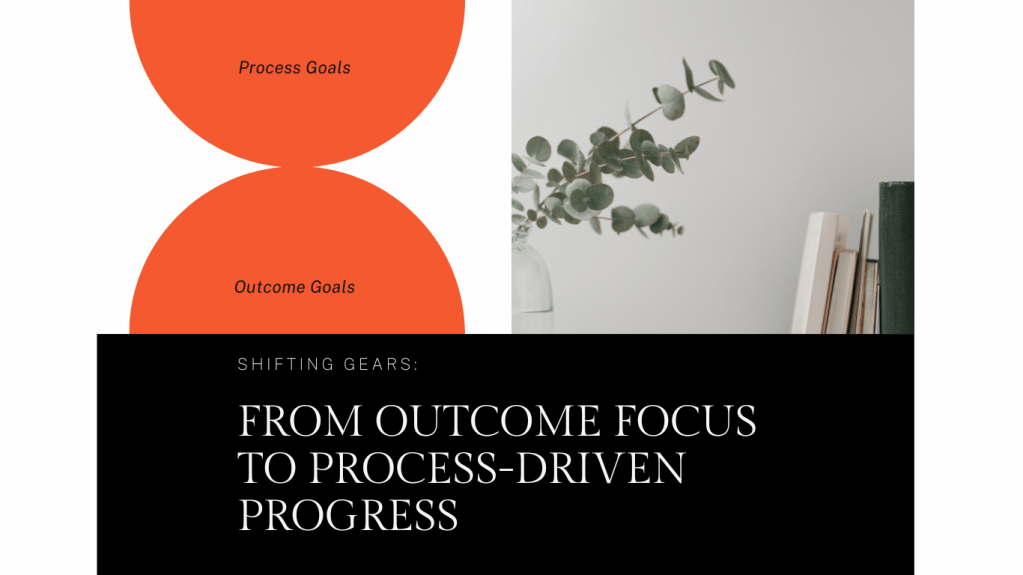
Like most of us, I have made the mistake of setting goals that are dependent on outcomes, and have been stressed about not getting there. Outcome Goals focus on the end-result and can sound like:
– I want a promotion
– I want to save X amount of money
– I want to be recognized as an expert in my field and so on.

Outcome goals are important. They give us a clear path towards something that we can strive for, but they can often be problematic because they focus only on the end result of efforts, something over which we have limited control due to the dependency on external factors. Outcome goals are great at setting a clear target to aim for, are measurable, but the dependance on external factors and lack of immediate gratification (slower progress) can lead to disappointment.

Process goals on the other hand, are means to the end for Outcome Goals.

While most of us tend to focus on outcome goals, I find that process goals often contribute more to success than outcome goals do.

Process goals focus on action – giving us a sense of agency, and are great for building habits.
Here’s why I find process goals powerful:

  • Increased control: They empower us by focusing on actions within our control, fostering a proactive approach and building confidence.
  • Improved motivation: Smaller, achievable process goals provide frequent wins and milestones, boosting motivation and preventing burnout often associated with distant, outcome-based goals.
  • Greater adaptability: They’re flexible and can be adjusted as needed, allowing us to adapt to changing circumstances and maintain progress even when outcomes shift.
  • Enhanced learning: The focus on consistent action and feedback promotes continuous learning and improvement.

The key, of course, lies in balance. Being aware of the distinction and being mindful of our internal dialog about goal setting is extremely important in getting the best out of planning and action, and the practice of balancing the two will also aid in deciding when to capitalize one over the other.

Process goals of the previous examples can look like:
– I want a promotion —> I want to upskill and be better at my job
– I want to saving X amount of money —> I want to be better at managing my finances through budgeting, tracking etc
– I want to be recognized as an expert in a field —> I want to be committed to learning and sharing my knowledge
– I want to lose weight —-> I want to train twice a week

A few strategies that help me keep process goals on track include keeping process goals SMART (Specific, Measurable, Achievable, Relevant, and Time-bound), tracking progress and celebrating small wins to stay motivated, being flexible and adjusting process goals as needed, and combining process goals with outcome goals for a balanced approach.

While the focus on goals and progress dates back to early management theories, today’s understanding draws on various fields including behavioral psychology and personal development, with modern proponent of Process Goals such as James Clear (Atomic Habits) highlighting the power of process-driven habits for lasting success. If you haven’t ready Atomic Habits already, I highly recommend it.

Wants tied to outcomes that we cannot control are a recipe for unhappiness, because while we strive for our desired outcomes, life often throws curveballs. Balancing process and outcome goals allows us to adjust our focus based on circumstances, ensuring we keep moving forward even when the end result might shift. This agility makes us more resilient and better equipped to handle the inevitable challenges that come our way.

How to be a Better Listener

Satya Nadella, after taking over Microsoft in 2014, embarked on a “listening tour” where he met with thousands of employees across the globe. He actively listened to their concerns, ideas, and frustrations, which helped him diagnose Microsoft’s cultural issues and implement successful turnaround strategies.

Listening is a skill that is not often talked about, and yet is an extremely crucial part of being good at our jobs, relationships, and any social interactions. I have been trying to understand how I can be a better listener, to show up in my personal relationships, my work, and in passing interactions. I was drawn to Carolyn Coughlin’s work on the topic and have learnt a lot from her material. Carolyn is an executive coach and co-founder of Cultivating Leadership – a leadership development consulting firm. Her approach to listening is deeply informed by adult development theory and the nuanced ways in which we construct meaning and identity through language.

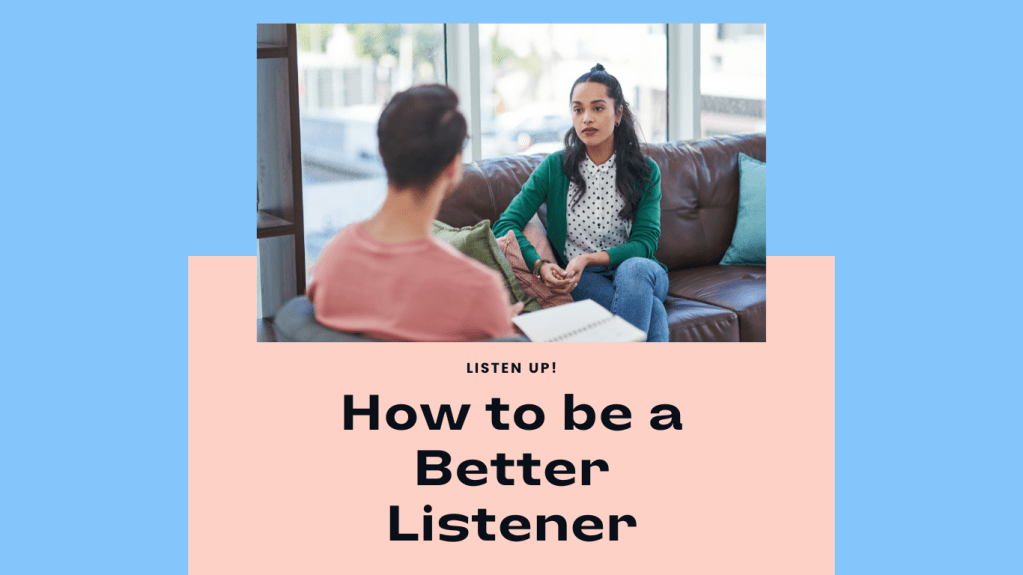
Carolyn describes three forms of Listening: Listening to Win, Listening to Fix, and Listening to Learn. I find that being aware of the terminology itself helps me to be more mindful of how I show up and listen better.

Listening to Win: You just saw a movie with a friend, and you’re sharing what you didn’t like about it. Your friend really liked the movie, so they counter everything you’re pointing out. Their approach is to persuade you to accept their viewpoint of how the movie was not bad, instead of just listening and trying to understand. This form of listening to win involves trying to make a problem seem nonexistent by dismissing it outright. It’s about overcoming the other person’s concerns by negating them, which can lead to a superficial resolution of conflict with little or no understanding or empathy​​ (and a completely unsatisfying exchange!)

Listening to Fix: My co-worker is sharing how they’re feeling overwhelmed at work. I find myself jumping in with suggestions for managing it and offering a dozen solutions nobody asked for.
This type of listening is action-oriented, where the listener tries to solve the speaker’s problem, often before fully understanding any nuance of the issue. Of course, It comes from a place of wanting to help, but it tends to surpass the speaker’s need to be heard and understood before seeking solutions​​. Additionally, my coworker wasn’t really asking for solutions in the first place.

Listening to Learn: This is my favorite, and is the one that I try to practice at work and in my personal relationships (although I do catch myself failing!). Carolyn explains that Listening to Learn means going into a conversation with curiosity, and a genuine desire to hear what the person is trying to share, beyond the surface level of what is being said. This often entails reflecting back to the person to show understanding, asking questions, and gaining deeper insight into their thoughts and feelings. It’s about truly understanding the speaker’s intentions and is considered a more empathetic and effective form of listening​​​​.

To me, this intuitively feels like the way I want to be heard, and so it is the form of listening I try to inculcate in my everyday. I find that it fosters connection, empathy and understanding and has led to the most meaningful conversations I have ever had.

Listening to learn in particular is a key skill in professional settings, and a display of true leadership.

My personal practice these days, is to not offer solutions if they are not asked, and to try and communicate in a way that the speaker truly feels seen and heard. Simply knowing the terminology here helps me be more mindful of this. For example, when I catch myself starting to give unwanted solutions I quietly say to myself – “I think I’m listening to fix , maybe pause for a second and ask a question instead, or just listen.”

I highly recommend consuming Carolyn’s content and ‘Listening’ to what she has to so eloquently say about this subject!